
James Chin
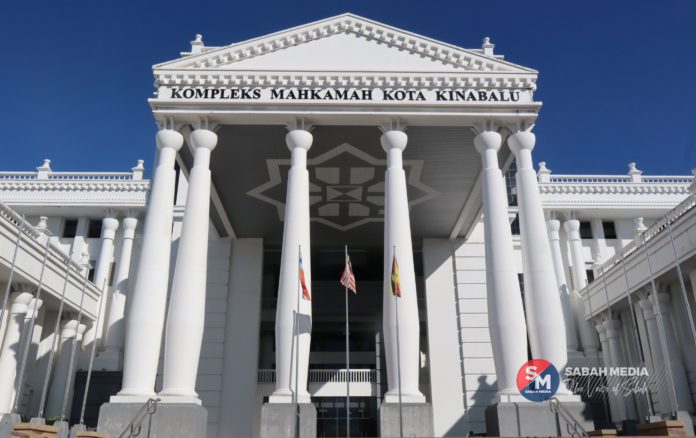
In a landmark decision on October 17, 2025, the Kota Kinabalu High Court affirmed Sabah’s constitutional right to 40% of the net revenue derived from the state by the federal government, a promise embedded in Article 112C and the Tenth Schedule of the Federal Constitution.
This ruling addressed nearly five decades of neglect, the “lost years” from 1974 to 2021, where Putrajaya failed to review and remit the special grant as mandated. The court ordered immediate negotiations between the federal and Sabah governments to rectify this historical injustice, setting a 180-day timeline for resolution.
Yet, the federal government has chosen to appeal certain “defects” in the judgment, including findings of abuse of power and the unlawfulness of recent grants. This partial appeal risks unravelling the entire ruling piece by piece, undermining trust and delaying justice for Sabahans.
It is time for Prime Minister Anwar Ibrahim to do the right thing: instruct the federal AG to withdraw the appeal entirely, commit to paying the 40% arrears in realistic instalments, and correct this glaring historical mistake.
The decision to appeal, even if limited to the language and reasoning of the judgment, smacks of a strategic ploy to erode the ruling’s foundations without directly challenging the 40% figure. Putrajaya claim they are not disputing the entitlement itself, but by targeting key orders, such as the declaration of past abuses and the mandatory review process, they are effectively attempting to toss out the judgment little by little.
Why appeal the findings of “misuse of power” by previous administrations if the goal is genuine reconciliation?
This move suggests a reluctance to accept full accountability, allowing the government to claim political credit for recognizing the 40% while avoiding the financial and legal consequences.
Sabahans, already weary from decades of unfulfilled promises under the MA63, see this as yet another manoeuvre to not pay ultimately. Sabah has been one of Malaysia’s poorest states for decades and this money will go a long way in correcting this.
Moreover, in my opinion, appealing even the wording perpetuates a colonial-era mindset, where Kuala Lumpur dictates terms rather than honouring an equal federalism and recognising a grave historical mistake.
The reality is that the arrears owed to Sabah are staggering. The federal government has no money to pay this lump sum outright, a reality acknowledged in statements emphasizing staged implementation. The only realistic path forward is to pay in instalments, structured over a reasonable period to avoid crippling the national budget while providing Sabah with much-needed funds for infrastructure, education, and poverty alleviation.
The High Court’s ruling provides a clear framework, mandating a review within the spirit of MA63, yet the appeal threatens to reopen these wounds in the Court of Appeal, prolonging uncertainty.
This issue represents the first big test for Sabah Chief Minister Datuk Seri Hajiji Noor, and GRS, who has positioned himself as a defender of state rights. Hajiji’s administration must navigate these talks assertively, pushing for a fair deal and formula. For Hajiji, this is an opportunity to cement his legacy as a leader who delivered on 40% promises, but it requires Hajiji to take a strong public stand against federal foot-dragging.
If the deal is not done, Anwar and PH are in big trouble for the 16th General Election (GE16), widely expected end of this year or next year. Social media discourse reveals deep scepticism; the partial appeal has only fuelled accusations of insincerity.
Time is short, the court has given a tight deadline, in April 2026. With negotiations barely underway and concerns raised over their pace, every day spent on appeals is a day lost for constructive dialogue.
Among all of Sabah’s historical grievances, such as disputes over continental shelf rights, PTI and immigration autonomy, and oil/gas share, this one is black and white. The 40% is explicitly mentioned in the Federal Constitution, not a vague promise but a binding covenant from Malaysia’s formation. Unlike other MA63 issues mired in interpretation, this entitlement is unambiguous, making any evasion a blatant betrayal.
In my opinion, Prime Minister now faces a defining moment: will he stand up and correct history? Anwar, who rose to power on a platform of reform and justice, has the chance to go down in history as the leader who finally honoured Sabah’s constitutional 40% entitlement.
By withdrawing the appeal entirely, he can signal a break from the centralizing tendencies of past administrations. Anwar must tell the AG to drop the appeal. There is still time.
If Anwar fails to do the right thing, Sabah (and Sarawakians) will never forget this betrayal. The Borneo states, which constitute 60% of Malaysia’s total land area, and contribute disproportionately to national wealth through oil and gas resources, have endured marginalization long enough.
Another broken promise could erode the federation’s fabric. Anwar’s legacy hangs in the balance: be the reformer who mends historical wounds, or the leader remembered for perpetuating inequality.
The choice is clear. The federal government must withdraw the appeal, pay the 40%, and reset federal-state relations.
James Chin is Professor of Asian Studies at the University of Tasmania, and a leading authority on contemporary Sabah and Sarawak
(The opinions expressed in this article are those of the author and do not necessarily reflect the views or editorial position of this publication.)