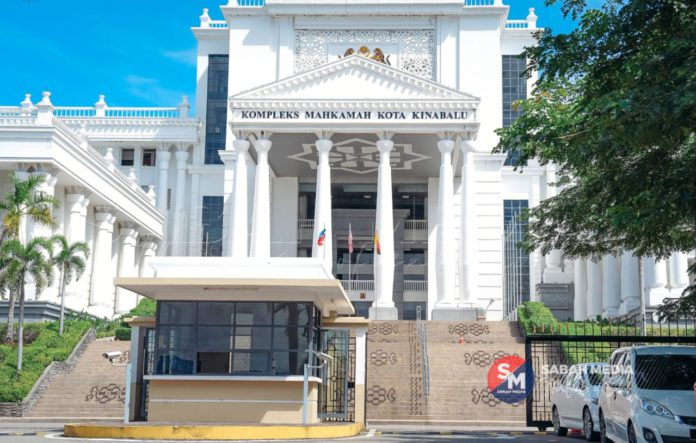

KOTA KINABALU: Nominated Assemblyman Datuk Roger Chin has expressed concern that at the expiry of 90 days from the High Court’s judgment on Sabah’s 40 per cent revenue entitlement, no meaningful negotiations have taken place.
Chin said that although the review process has technically begun, no genuine engagement aimed at fulfilling the court-ordered review has occurred.
“To date, there has been only one meeting. As publicly reported, that meeting was described as being focused on clarifying parameters, methods, amounts, and payment timelines relating to Sabah’s 40 per cent revenue entitlement,” he said in a statement.
Chin said, while such clarification may be a necessary preliminary step, the meeting did not result in substantive engagement or agreement on the core issues required to give effect to the judgment.
“There was no confirmation that there was substantive negotiation on quantum, no agreed methodology, no disclosure sufficient to support an accounting exercise, and no concrete timeline directed at achieving compliance within the period ordered by the Court, he said.
Chin also said a second meeting scheduled for Dec 19, 2025, was postponed by the Federal Government with no new date fixed.
Chin said, the postponement, without rescheduling or substantive follow-up, reinforces concerns regarding the absence of urgency and seriousness required by the judgment. No explanation consistent with the urgency mandated by the Court has been provided.
“At the 90-day mark, half of the period envisaged by the Court for reaching agreement has elapsed. A single preliminary meeting, followed by a postponed engagement with no replacement date, cannot reasonably be characterised as good-faith compliance with the Court’s orders. It falls materially short of what the judgment plainly contemplated,” he added.
Chin described the situation as deeply concerning and that the lack of substantive progress does not bode well for achieving compliance within the 180-day timeframe mandated by the Court.
He emphasised that a review under Article 112D cannot be satisfied by isolated or intermittent discussions.
“The judgment of the Court imposes binding and enforceable legal obligations, not discretionary objectives or statements of intent and envisages serious, active, and bona fide engagement between the Federal and State Governments, directed at a substantive review capable of producing an agreement that gives effect to Sabah’s constitutional entitlement,” he said.
He added that minimal engagement followed by open-ended postponements cannot reasonably be characterised as compliance, noting that compliance requires urgency, substance, transparency and good faith.
Chin said unless there is an immediate and demonstrable shift towards genuine Article 112D review negotiations—characterised by regular meetings, substantive positions, timely disclosure of financial data, and a clear commitment to reaching agreement—the risk of non-compliance with the judgment is real and escalating.
“The continued failure to engage meaningfully not only jeopardises compliance with the 180-day timeline ordered by the Court, but also undermines the review process expressly directed by the judgment, thereby exposing the Respondents to a real risk of further legal consequences.
“This situation must be corrected without further delay,” he said.
On October 17 last year, the High Court here, allowed the Sabah Law Society’s (SLS) judicial review concerning the state’s constitutional right to claim 40 per cent of the net revenue derived from Sabah.
The court, among others, allowed an order of mandamus sought by SLS to direct the federal government to hold another review with the state government under Article 112D of the Federal Constitution.
This is to give effect to the Federation’s obligation to make the 40 per cent entitlement payment to the State of Sabah under Article 112C, read with subsection (1) of section 2 of Part IV of the Tenth Schedule of the Federal Constitution, for each consecutive financial year from 1974 to 2021.
The review must be held within 90 days, and an agreement reached within 180 days from the date of the order.