


By Prof James Chin
A landmark ruling by the Malaysian High Court has overturned decades of federal-state financial policy and exposed the injustice of the revenue split between Kuala Lumpur and the resource rich state of Sabah.
The court ruling was handed down last October. But Prime Minister Anwar Ibrahim is still grappling with how to respond, such are the profound implications for federalism, fiscal equity, and centre-state relations.
Whatever way one looks at it, Kuala Lumpur faces a hefty bill at a time when central government finances are under enormous strain, driven by skyrocketing energy costs.
And there is more than a financial cost. The court ruling highlights deep structural tensions in Malaysia’s federal arrangements and fuels grievances that tear at the federation. Addressing this will require more than a new generous revenue transfer deal.
The Constitutional Revenue Promise
At the heart of the dispute is a provision of the Malaysia Agreement 1963 (MA63) promising Sabah would receive 40% of net federal revenue raised from the state.
This special grant originates from the Inter-Governmental Committee (IGC) Report and MA63, which promised Sabah (and Sarawak) enhanced fiscal autonomy to compensate for joining the Federation. The Federal Constitution stipulates this revenue sharing arrangement; it is not a discretionary grant but a constitutional obligation, subject to periodic review.
The entitlement was honoured in the early years post-1963, with reviews conducted up to 1974. However, from then to 2021 no reviews were conducted, a period Sabahans called the “Lost Years”. During that period, the Federal Government paid Sabah a fixed annual special grant of RM26.7 million ($A 9.4 million). This amount was set in the First Review Order for 1969–1973 and simply rolled forward. This is far below a 40% share of the revenue Sabah generates from its rich resources of oil and gas, timber, and palm oil.
The Judicial Review
In 2022, the Sabah Law Society (SLS) filed a judicial review against the Federal Government and Sabah State Government. SLS argued that the failure to conduct mandatory reviews breached constitutional duties, resulting in unlawful deprivation of funds needed for development. On 17 October 2025, High Court Justice Celestina Stuel Galid ruled decisively in favour of SLS.
The Court ruled that:
The judgement affirmed that the entitlement is a constitutional right, not a political favour.
Despite public assurances from Prime Minister Anwar that the government accepted the 40% principle and would not appeal the core entitlement, federal actions tell the opposite story. The government appealed aspects of the High Court judgment, particularly the mandamus timelines and certain wording perceived as offensive to past leaders. It sought and obtained a stay of execution from the Court of Appeal on 6 April, pausing the review and payment deadlines pending appeal. The stay grants the federal government a permanent hiatus, with compulsory reviews now on hold.
Anwar, meanwhile, has repeatedly stated a commitment to honouring the court ruling and paying Sabah, yet the sheer amount involved—tens of billions of ringgit in arrears— makes full compliance daunting amid fiscal constraints. The combination of partial appeals, procedural stays, and slow negotiations despite court orders suggests the federal strategy is to delay as long as possible.
The federal government’s realistic options appear limited:
Pay arrears in instalments over many years. However, even this may strain federal finances and face resistance if Sabah demands faster disbursement.
Forgive debt as an interim settlement, thus reducing what the Sabah government owes the federal government (e.g., development loans, infrastructure financing). This could provide substantial relief without immediate cash outflow but requires transparent accounting.
Negotiate the final settlement at an amount far below the full debt, closing the matter politically and settling it legally. This is the most likely path but risks accusations of selling out Sabah’s rights.
The current Gabungan Rakyat Sabah (GRS) government under Chief Minister Hajiji Noor, who is aligned with the federal unity government, is often seen as beholden to Anwar. During the court-ordered 90 days of negotiations, only four meetings were held between the federal and Sabah governments, reinforcing perceptions of foot-dragging.
Deeper Structural Reluctance from Putrajaya
To understand what is really happening, it is necessary to see the federal actions as part of federal-state interactions since independence. Since 1963, the Malay political establishment have viewed Sabah (and Sarawak) as resource peripheries whose wealth, especially oil and gas, primarily benefits and belongs to the centre. Putrajaya sees Malaysia as a centralised federation with a supreme federal government. Paying substantial arrears runs against this entrenched instinct of centralised command and control.
This also explains why Putrajaya has limited respect for MA63’s spirit. The unilateral changes post-1974, such as “Project IC” altering Sabah’s demography, suggest a principle that Sabah could be managed rather than treated as an equal partner. Federal interventions in Chief Minister appointments and reliance on the Sabah branch of the United Malays National Organisation (UMNO) to temper “Sabah for Sabahans” sentiments exemplify this approach.
Putrajaya appears to believe time is on its side: delay through legal processes and bureaucratic red tape, apply subtle economic and security pressure and wait for electoral cycles to dilute state nationalism. The constant reminders that Sabah relies on federal defence against Philippine claims of sovereignty, the 2013 Lahad Datu armed intrusion, and federal control over key infrastructure (water, electricity, etc) underscore the power asymmetry. The best case scenario for Putrajaya would be to overturn the 2025 landmark judgement through a series of appeals. This can be done quite easily but it takes time.
Sabah at the Crossroads
Sabah stands at a critical juncture. With the 16th general election (GE16) approaching, the question is whether the “Sabah for Sabahans” sentiment will surge again or if national parties will regain ground. Court victories alone cannot restore rights; genuine political settlement is essential.
This requires a united, assertive Sabah government and actors across the Sabah political spectrum being willing to confront Putrajaya when necessary. The current soft approach, waiting for the outcome of GE16, rather than pushing hard pre-election, angers many Sabahans and plays into federal hands. Delaying allows Putrajaya to minimise payouts through prolonged negotiations.
History shows that, without sustained pressure, such claims fade. Sabah leaders must maintain momentum and demand a fair settlement before GE16, or risk repeating past marginalisation. True federalism demands respect for constitutional promises, not perpetual postponement. Only strong, unified Sabah leadership can translate legal wins into fiscal justice.
=====================================================
This commentary was first published by AsiaLink, University of Melbourne.
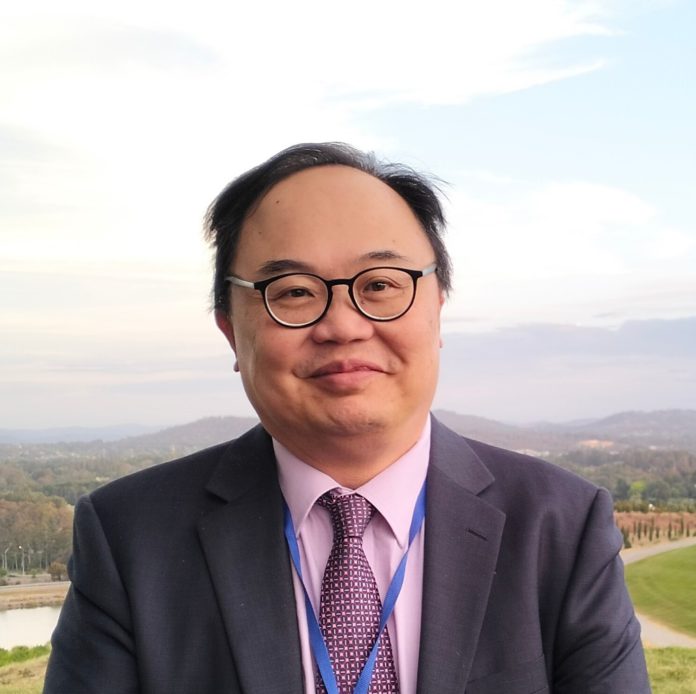
James Chin is Professor of Asian Studies, University of Tasmania, and the leading scholar of East Malaysian politics.
(The opinions expressed in this article are those of the author and do not necessarily reflect the views or editorial position of this publication.)
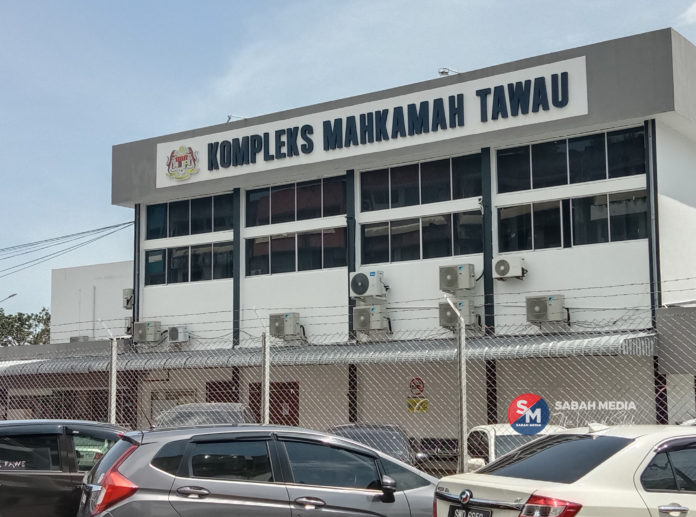
TAWAU: Issues relating to share price movements and alleged insider trading were put to the plaintiff’s witness during cross-examination at the High Court here today in a corporate dispute involving Aumas Resources (Bahvest Resources Bhd ) and several former key executives.
The proceedings, presided over by Judicial Commissioner Steve Ritikos, heard testimony from the plaintiff’s first witness, Chong Tzu Khen, a former chief executive officer and shareholder-turned-director, during questioning by defence counsel Andy Tay.
During the session, the defence put to Chong that his claims implied allegations of market manipulation against Datuk Lo Fui Ming.
Chong acknowledged that the line of questioning suggested insider trading elements but maintained disagreement with several propositions raised by counsel.
Chong told the court that after becoming a director in May 2023, he did not lodge any formal complaint with regulators, explaining that his focus had been on continuing mining operations and safeguarding shareholder interests.
Defence counsel suggested that the absence of formal action weakened the allegations, which Chong disputed.
The court also heard exchanges regarding whether Lo Fui Ming remained a controlling shareholder after disposing of shares.
The defence suggested that any loss of controlling status would limit influence over an extraordinary general meeting (EGM), while Chong maintained that board positions could still carry influence.
Questions were further raised about an Employee Share Option Scheme (ESOS).
Chong agreed that shareholder approval and regulatory disclosures were required but said potential dilution remained a concern.
He also acknowledged that no written objection had been submitted before a shareholders’ requisition notice was issued in April 2023.
Throughout the cross-examination, the defence highlighted the absence of written complaints or documentary evidence supporting several allegations, with Chong confirming that many of his concerns had been raised verbally rather than through formal documentation.
Proceedings were adjourned and will resume tomorrow at 9.30am.
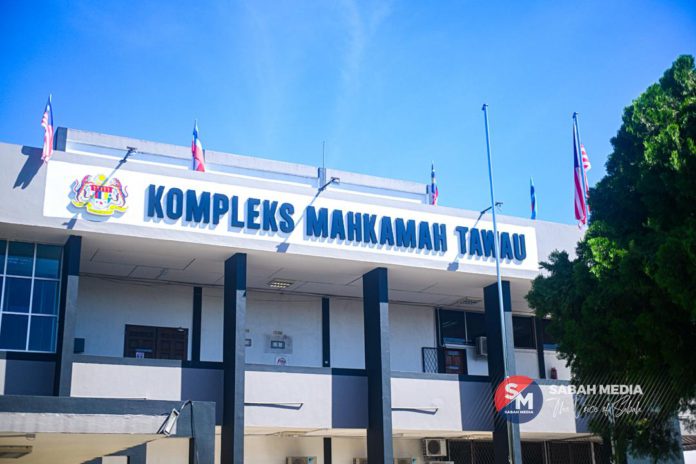
]]>TAWAU: Former AuMas Resources Berhad CEO, Chong Tzu Khen, today rejected claims in official company announcements that the company had acknowledged operating beyond permitted boundaries, during the ongoing civil trial involving AuMas, its subsidiary Wullersdorf Resources Sdn Bhd (WRSB), and Southsea Gold Sdn Bhd, alongside Datuk Lo Fui Ming, Lo Teck Yong, and Chong Khing Chung.
In cross-examination before Judicial Commissioner Steve Ritikos at the High Court of Tawau, lawyer Andy Tay cited Bahvest’s announcements on 8 and 9 May 2023, which suggested that the company had recognized its operations exceeded permitted limits. Chong disagreed, asserting that the announcements did not constitute any such acknowledgment.
The session also touched on four Letters of Demand issued by Southsea Gold. Chong testified that he first came across the letters only when called as a witness by the Malaysian Anti-Corruption Commission (MACC) in July 2023 and maintained that there was no official finding declaring the letters false. He emphasized that any belief about backdating of the letters was his personal view rather than established fact.
The questioning highlighted the trial’s central dispute over whether the letters represented legitimate claims or were allegedly retaliatory actions against former management. Tay further noted that the company had never accused Datuk Lo Fui Ming of forgery in the announcements and that Chong, as a board member, had not requested any corrections or withdrawals.
The trial will continue tomorrow at 9:00 a.m.
Plaintiffs are represented by Norbert Yapp & Associates with Azimi Yahya, while defendants are represented by Andy Tay & Associates, along with Lawrence Chai and Peter Soong & Partners.
]]>TAWAU: The seventh day of the civil trial involving AuMas Resources Berhad (formerly known as Bahvest Resources Berhad) saw the continuation of the cross-examination of the plaintiff’s first witness (PW1), former AuMas Chief Executive Officer Chong Tzu Khen, over a RM20.4 million claim before Judicial Commissioner Steve Ritikos at the High Court here today.
The proceedings focused on four letters forming the basis of the claim, with questions from defence counsel (DC) Andy Tay centred on the authenticity of the documents, the timeline of receipt, and prior public disclosures.
Chong agreed that he only saw the four letters in July 2023 and acknowledged that there was no forensic report or official finding declaring the documents to be forged. He also confirmed that the letters had been disclosed to the public through announcements to Bursa Malaysia before July 2023.
Key questions and answers during the cross-examination included:
DC: When did you first see these letters, date please?
PW1: Sometimes in July 2023.
DC: You confirmed the date in July 2023?
PW1: Yes.
DC: You have not obtained any forensic report concluding those letters are forged and you have not produced any expert evidence confirming forgery, correct?
PW1: I agree. But… (“But…” the witness means he will respond in writing later)
DC: There is no official finding that those letters are forged, agree?
PW1: I agree. But…
DC: These letters were announced to the public via Bursa Malaysia before July 2023 (Enclosure 135 CBOD Part B vol 3 pages 833-836, 850-853, 854-857 and 858-859), agree?
PW1: I agree. But…
DC: When did you become a director of Bahvest, date please?
PW1: On 26 May 2023.
DC: By becoming a director of Bahvest, you had knowledge of these letters before July 2023, correct?
PW1: I only knew there were announcements on the RM20.4 million demand by Southsea Gold.
DC: This RM20.4 million is an eye-catching figure to you. Is it not a substantial amount that a reasonable person would proceed further to read the basis of the claim, agree or not?
PW1: I agree. But there were temporary resolutions for a non-refundable deposit of RM13 million to be settled in two tranches. The first payment of RM6 million was made on 10 May 2023 and the balance of RM7 million to be paid on or before the end of May 2023.
DC: By your detailed answer above, do you agree with me that you actually read all the announcements and understand inside out the whole RM20.4 million demand related to the four letters and the subsequent settlement, agree?
PW1: I agree. But…
The court also examined issues surrounding the earlier acquisition of Wullersdorf Resources Sdn Bhd, including a Letter of Consent dated 18 September 2015, which was appended to a circular to shareholders dated 28 December 2016 and made publicly accessible.
Chong agreed there was no deliberate concealment of the letter and that no document had been produced in court stating that it was an official pre-condition to the acquisition.
The plaintiffs, AuMas/Bahvest and Wullersdorf Resources Sdn Bhd, are represented by Norbert Yapp & Associates and Azimi Yahya, while the defendants are represented by Andy Tay & Associates together with Lawrence Chai and Peter Soong & Partners.
The proceedings were adjourned and will resume tomorrow.
]]>TAWAU: The civil trial involving AuMas Resources Berhad (formerly Bahvest Resources Berhad) and its wholly-owned subsidiary, Wullersdorf Resources Sdn. Bhd., continued today at the Tawau High Court before Judicial Commissioner Steve Ritikos.
During the proceedings, the court issued several case management directions regarding several pending applications.
The legal action names Lo Fui Ming, Lo Teck Yong, Chong Khing Xhung, and Southsea Gold Sdn. Bhd. as defendants.
Counsel for the fourth and fifth defendants informed the court that the application to strike out the action, along with the supporting affidavit, was emailed to the relevant parties last week.
The court set February 26, 2026, as the deadline for filing the Affidavit in Opposition, while the Affidavit in Reply must be filed by March 12, 2026.
The same counsel also informed the court that he represents the fifth defendant and will be filing another striking-out application in the near future.
The court decided that the new application will follow the same timeline as Enclosures 15 and 55, namely the Affidavit in Opposition by March 2, 2026, and the Affidavit in Reply by March 16, 2026.
The court also fixed the timeline for written submissions for three applications, including Enclosure 50, Enclosure 55, and the fifth defendant’s new application.
All parties were directed to file written submissions simultaneously before March 31, 2026, while reply submissions must be submitted by April 14, 2026.
The hearing date has been set for April 29, 2026, which will also include an open court hearing for Enclosure 4. The previous date of March 18, 2026, has been vacated.
Meanwhile, counsel Yapp informed the court that submissions for the injunction application have not yet been filed. The court directed that the same timeline as the other four applications shall apply to the injunction application.
Counsel for the plaintiffs informed the court that representatives for the sixth, seventh, and ninth defendants intend to file an application for an extension of time.
The plaintiffs raised no objection. However, the court emphasized that any application for an extension of time must be filed within the stipulated period.
]]>TAWAU: The civil trial involving AuMas Resources Berhad (Bahvest Resources Berhad) and its wholly owned subsidiary, Wullersdorf Resources Sdn Bhd (WRSB), against Datuk Lo Fui Ming, Lo Teck Yong, Chong Khing Chung and Southsea Gold Sdn Bhd continued before the High Court in Tawau today.
The proceedings, heard before Judicial Commissioner Steve Ritikos, entered its sixth day with the cross-examination of the plaintiffs’ first witness, former AuMas Chief Executive Officer Chong Tzu Khen.
The plaintiffs are represented by Norbert Yapp & Associates together with Azimi Yahya, while the defendants are represented by Andy Tay & Associates alongside Lawrence Chai and Peter Soong & Partners.
Among the reliefs sought, the plaintiffs are seeking declarations that Datuk Lo Fui Ming and Lo Teck Yong breached their fiduciary, statutory and duty of care obligations, and that a Temporary Resolution between WRSB and Southsea is null and void. They are also seeking the return of RM6 million paid to Southsea on May 10, 2023, general, aggravated and exemplary damages, interest at five per cent per annum.
During cross-examination, Chong acknowledged that he was a director of WRSB and had served as an alternate director of Southsea, with access to financial records and entitlement to attend and vote at board meetings.
However, he maintained that he was not invited to attend board meetings after April 26, 2023.
He further agreed that he had not recorded any formal objection in board minutes, nor lodged complaints with the Companies Commission of Malaysia (SSM), Bursa Malaysia or the police regarding the alleged mismanagement or the appointment of Chong Khing Chung as director.
The witness also accepted that there was no forensic audit report or regulatory finding supporting his claim that the company was run as a “one-man show”, but disagreed that his allegations were merely personal assumptions.
The court was told that the 2015 acquisition of WRSB by Bahvest was carried out with board and shareholder approvals, and involved due diligence conducted by professional advisers, investment bankers and external solicitors.
Proceedings were adjourned at 1pm and will resume tomorrow.
]]>KOTA KINABALU: The Democratic Action Party (DAP) Sabah welcomes the landmark decision by the Sabah High Court in favour of the Sabah Law Society (SLS) on Sabah’s constitutional entitlement to 40 percent of federal revenue derived from the state.
Its chairman, Datuk Phoong Jin Zhe said this decision marks a historic step forward in restoring justice and fairness for the people of Sabah, reaffirming the principles enshrined in Article 112D of the Federal Constitution and the Malaysia Agreement 1963 (MA63).
Phoong said, the DAP Sabah commends the Sabah Law Society for its courage and perseverance in pursuing this case, which represents the collective aspiration of Sabahans who have long sought the full recognition of their constitutional and fiscal rights.
“The judgment sends a clear and powerful message, that Sabah’s rights under MA63 are not mere political rhetoric but are legally binding obligations that must be honoured by the Federal Government.
“This victory is not only a legal victory for SLS but a moral victory for the people of Sabah, who have waited decades for justice to be delivered. The court’s decision restores faith in the rule of law and demonstrates that constitutional mechanisms remain a credible avenue to seek fairness and equality,” he said in a statement today.
Phoong said, DAP Sabah believes this ruling should serve as a turning point in federal–state relations.
“The Federal Government must now act decisively to implement what is rightfully due to Sabah and ensure that fiscal arrangements are transparent, timely, and fair.
‘We also urge the Federal Attorney General to respect the decision of the High Court and refrain from appealing. Prolonging this matter will only deepen public frustration and delay the justice that Sabahans rightfully deserve,” he said.
According to Phoong, DAP Sabah reiterates that this struggle has never been about politics, but about justice, dignity, and equality, the fundamental values that bind Malaysia as a federation built on trust and partnership.
Moving forward, DAP Sabah calls upon both the Federal and State Governments to work together in good faith, ensuring that the review process of the 40 percent entitlement and other MA63 commitments are handled with transparency and sincerity.
“This is the moment to demonstrate leadership and integrity to prove that federalism can work for all Malaysians, especially those in Sabah and Sarawak.
“This decision is a victory for the people, for justice, and for the spirit of Malaysia Agreement 1963,” Phoong added.
]]>By Mu Vitet
KOTA KINABALU: A tourism player has urged the authorities to take firm action against the growing number of illegal and unregulated stand-up paddle (SUP) and water sport activities at Tanjung Aru First Beach.
There are more than 30 illegal operators conducting SUP activities in the public area of the beach.
Despite enforcement officers from Kota Kinabalu City Hall (KKCH) seizing the paddleboards, they have been unable to deter the illegal business.
The source, who requested anonymity, said numerous individuals and groups have been operating without valid licences, setting up makeshift tents as changing rooms, and selling or renting equipment directly on the beach.
“Some even leave their boats and gear on the park’s grass, which is clearly against KKCH park regulations,” the source said.
They added that many operators do not possess the required business or tourism licences, raising concerns over safety and fairness.
“There are reports of foreign nationals, including from China and Sarawak, illegal immigrants, and even child labour being involved.
“This is not just a licensing issue but also one of ethics and public safety,” the source revealed.
Several tourists have reportedly been harassed, overcharged, or cheated.
There have also been disputes and fights when rental items such as paddles went missing.
According to the source, illegal operators undercut licensed businesses by offering rates far below approved prices, causing unfair competition for legitimate operators who have complied with the law for years.
“Even licensed operators should not be allowed to sell or promote services directly to guests at the beach.
“All bookings and payments must go through proper counters, such as those at the Tanjung Aru Eco Development (TAED) area or the Korean restaurant section,” they said.
“City Hall must intensify enforcement and conduct regular monitoring before the situation worsens,” the source added.
Tanjung Aru First Beach is one of Kota Kinabalu’s most visited attractions, drawing busloads of tourists daily to witness its breathtaking sunset over the horizon.
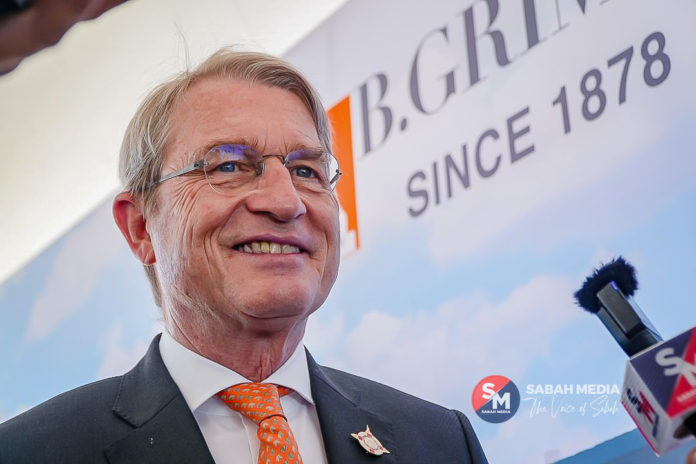
BANGKOK— Regional energy giant B.Grimm Power has broken ground on its first data centre project in Thailand, in partnership with Digital Edge (Singapore) Holdings Pte Ltd. (“Digital Edge”), marking the group’s entry into the fast-growing digital infrastructure sector.
B.Grimm Power President, Dato’ Sri Dr Harald Link, said the move was a natural progression for the group, which has decades of experience in power generation, engineering, and infrastructure development across Asia.
“Data centres fit extremely well into B.Grimm because we know how to build. We have our own air conditioners, we have constructed many buildings in the past, and we have strong relationships with power utilities,” he told Sabah Media after the groundbreaking ceremony on Wednesday

He added that the partnership with Digital Edge would provide the operational expertise needed to make the joint venture successful.
Link noted that the rapid adoption of artificial intelligence (AI) worldwide was fuelling unprecedented demand for electricity and digital infrastructure.
“One AI query consumes around six times more electricity than a Google search. Multiply that by AI agents communicating with each other, and the demand skyrockets,” he said.
He pointed out that B.Grimm Power was already expanding its energy portfolio in Malaysia, having secured 618MW under LSS5+ through its JV as well advance stage of combined-cycle plant in Peninsular, while also eyeing new opportunities in Sabah.
On employment, Link said data centres may not directly create large-scale jobs but could spur the digital economy and attract skilled talent.
“This site will employ many workers. But whether data centres create huge employment depends on how much we digitise and produce engineers locally to work with us,” he explained.
Addressing sustainability concerns, Link stressed that B.Grimm is committed to renewable energy.
“We hope governments will open the grids for renewable energy. B.Grimm is already a leader in renewables. We operate wind farms in Korea, solar projects across Asia, and even hold a share in one of the most advanced wind turbine manufacturers in Germany,” he said.
He added that the company’s network is already 28 percent less polluting than the main grid, with plans to offer both “green” and “normal” grids to customers.
Link also expressed optimism about expanding the group’s presence in Malaysia, particularly in Sabah.
“Sabah is one of the most beautiful places in the world, with no earthquakes or major storms. We are certainly keen to explore opportunities there,” he said.
Founded in 1878 as a trading company in Bangkok, B.Grimm Power has since grown into one of Southeast Asia’s leading energy players. The data centre venture, Link said, underscores its philosophy of building partnerships.
“We don’t see competition, we see partnership. Everybody can work together to make life better. That’s what drives B.Grimm,” he said.
Meanwhile, Group President of Digital Edge, John Freeman, said Thailand was chosen after an extensive search for the right local partner.

“We had probably met close to 70 potential partners for Thailand. Once we linked up with Dr Harald Link and B.Grimm, we knew they were the right partner for us, and this is a project we wanted to pursue,” he told reporters during the press conference.
Freeman said Malaysia was also on the company’s radar, describing it as a market with “huge potential” despite regulatory and infrastructure challenges.
“It’s been a bit complicated in terms of trying to get the right permits, power allocation, and water allocation. It takes time and due diligence, but once you secure that, it’s going to be a very good market. We continue to be interested, and we have a number of projects we’re pursuing,” he said.
He revealed that Digital Edge already has a joint venture in Malaysia with two projects in the pipeline, though the company has currently focused on Johor due to its proximity to Singapore and customer demand.
When asked about Sabah as a possible location, Freeman said the company had not yet committed to the state.
Beyond Thailand and Malaysia, Freeman said Digital Edge was actively developing several large-scale projects across Asia. These include a 150MW data centre campus in Jakarta, a 60MW facility in South Korea, and the ongoing expansion of its 300MW campus in India, where a third 48MW building is under construction.
“Japan is also very important for us, and Thailand is going to be extremely important for our regional strategy,” he said.
On the impact of AI adoption, Freeman noted that both global and regional players are likely to anchor their AI infrastructure in Asia, which would further boost demand for data centres.
“You’ll see the global players come here with their machine learning setups. But from an inference standpoint, I think that’s where you start to see a local ecosystem developing in Thailand and across Asia,” he said.
]]>KOTA KINABALU — The Malaysian hobby gaming scene made history recently when a ‘dark horse’ from Sabah, Daniel Tan, 35, emerged as the national champion of Warhammer 40,000, securing five consecutive wins at the Xunobi Warhammer 40K Golden Ticket Malaysian Nationals Finals 2025 held in Kuala Lumpur on July 6.
For those unfamiliar, Warhammer 40,000 — or simply Warhammer 40K — is no ordinary tabletop game. It is a blend of art, strategy, creativity and community that has captivated millions of players worldwide since it was created by the United Kingdom-based company Games Workshop in 1987.
The game is played on a large tabletop, typically measuring around 4 by 6 feet, filled with miniature military figures that players assemble and paint themselves. With over 26 factions to choose from — including Space Marines, Orks, Tyranids and Eldar — each player leads their unique army into highly tactical battles.
Unlike many other games, Warhammer 40K demands deep strategic thinking, combined with an element of chance through dice rolls. Each match can last between three to four hours, requiring mental and physical endurance, as well as mastery of rules that are regularly updated to keep gameplay balanced.
Globally, the Warhammer community is estimated to number between 3.5 million and 5 million players, including celebrities such as Ed Sheeran and Henry Cavill.
With his victory, Daniel is set to carry Malaysia’s flag to the Warhammer World Championships in Atlanta, Georgia, United States, from November 6 to 9, 2025. Sabah Media caught up with him to learn more about his remarkable journey.

A HUMBLE BEGINNING
“I started playing two years ago after my brother introduced me to the game,” said Daniel, who also runs team building programmes, leadership and communication training, and manages several vending machines as part of his livelihood.
For Daniel, developing this hobby in Sabah has been no easy feat. “The community here is very small compared to Peninsular Malaysia. In Kota Kinabalu, there’s only one dedicated place to play. I even made my own table and terrain at home just to practise,” he shared.
Whenever he travels to Kuala Lumpur, Daniel brings along his miniature army to gain more playing experience with the community there. He also sharpens his skills by watching live streams of international tournaments from the UK and United States on YouTube.
WHAT IS WARHAMMER 40K?

According to Daniel, for those who have never heard of Warhammer 40K, it can be described as a tabletop war game where players act as generals commanding their own armies.
“Imagine a combination of chess and Risk, but on a much larger and more complex scale,” he explained.
The game is played on a board measuring about 4 by 5 feet, complete with varied terrain, obstacles, missions, and unique layouts. Players can choose from 26 different factions — picture chess, but with far more than just black and white pieces, each with its own rules, units, and strengths.
What makes it even more intriguing is that before you can play, you need to buy, assemble, and paint the miniatures yourself. This makes Warhammer 40K not just a strategy game but also an artistic hobby that demands patience and attention to detail.
Dice play an important role during matches. Every attack, movement, or decision is a mix of strategy and luck determined by dice rolls. As players often say, “the dice tell a story.”
Each match typically spans five rounds and can last around 3 to 3.5 hours. At the Malaysian national finals, for example, participants played three matches in a day, from 9am to 9pm, including lunch breaks. Some players even use chess clocks to ensure fair time management for both sides.
This game not only challenges the mind but also requires physical and mental stamina. According to Daniel, Games Workshop updates the rules every three months to keep the game fresh, fair, and exciting.
PREPARING TO BECOME A CHAMPION
On his preparation, Daniel shared, “Honestly, a big part of it was just wanting to experience a two-day, five-game tournament. But of course, I wanted to win — not just for myself, but for my family, for Sabah, and for the golden ticket to represent Malaysia on the world stage.”
He studied the missions, prepared his army list, and crafted strategies for each opponent. “I tried to stick to my plan, and thankfully, it worked out — I won all my matches!” he said with a smile.
HEADING TO ATLANTA: THE NEXT BIG CHALLENGE
This victory has opened the door for Daniel to compete at the World Championships, but the biggest hurdles now are visa arrangements and travel expenses.
“Visa costs from Sabah are higher because I need to travel to Kuala Lumpur for the interview. Plus, flights and accommodation in the US aren’t cheap. For me, this is a once-in-a-lifetime opportunity to represent Malaysia,” he said.
To turn his dream into reality, Daniel is seeking sponsorship. The total cost is estimated at RM10,000 to RM15,000. He is also selling one of his unused miniature armies and plans to design and sell special T-shirts to raise additional funds.
Those interested in supporting or sponsoring Daniel can contact him via Instagram at @danster_x45.
FROM SABAH TO THE WORLD
Daniel’s story is not just about a tabletop game — it’s about passion, hard work, and ambition. From a self-built table in Kota Kinabalu, he now steps onto the world stage, proudly carrying the names of Sabah and Malaysia.
“Pray for me,” Daniel said with a hopeful smile.
]]>